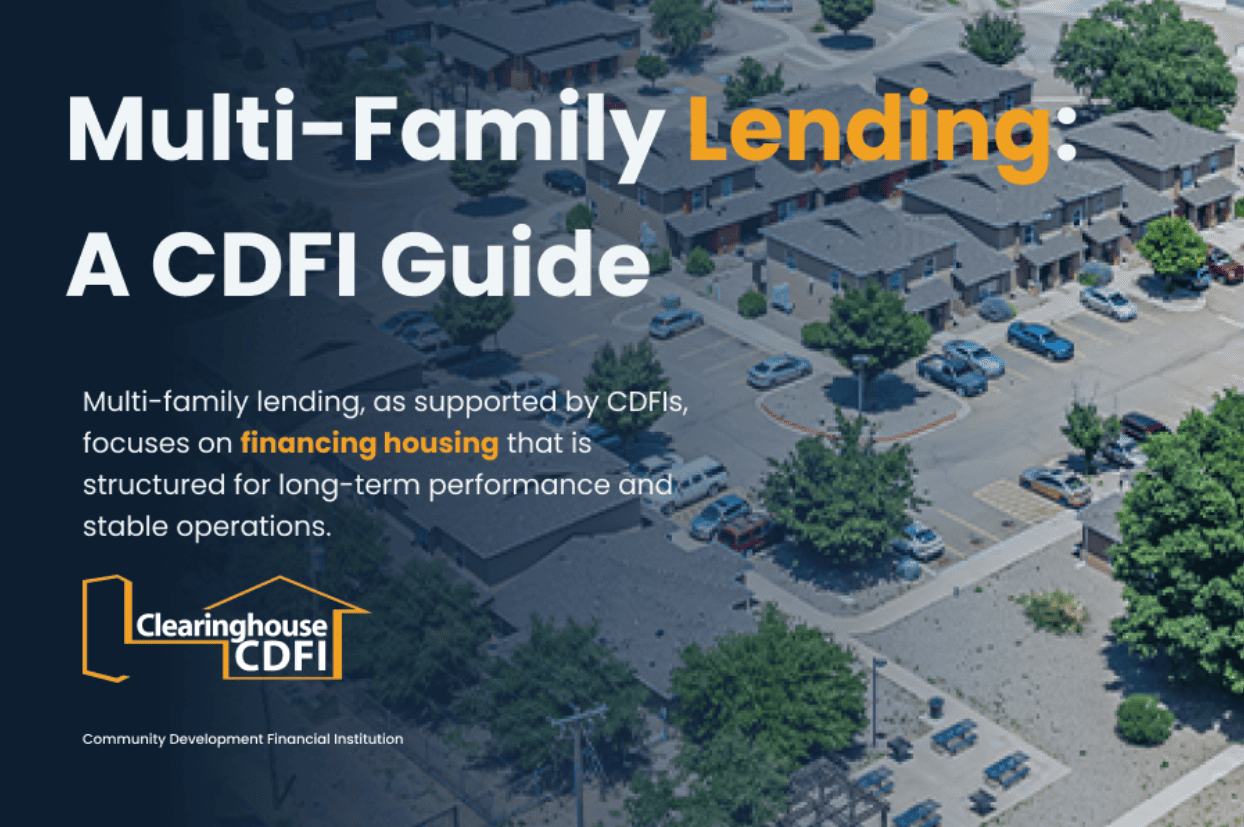
Multi-family financing supports residential properties with multiple units, from smaller apartment buildings to larger housing developments, with repayment typically supported by rental income. The financing structure can vary significantly from one project to another. Property size and operating history affect how a lender evaluates the underlying real estate, while affordability requirements and the project’s stage of development can introduce additional considerations. The lender must also account for the mix of funding sources when determining how to structure the loan.
For projects with more complex operating or financing requirements, a community development financial institution (CDFI) may be one potential source of financing. Understanding how CDFIs evaluate multi-family projects can help borrowers determine when that option may be appropriate.
How CDFIs Can Support Multi-Family Lending
CDFIs are federally certified financial institutions that expand access to capital in communities and for borrowers with limited access to traditional financing. This focus can influence the types of multi-family projects CDFIs finance and the role they play within a transaction.
Financing for a Range of Multi-Family Projects
Smaller multi-family properties and affordable housing developments may have financing needs that require a more specialized structure. CDFIs complement traditional lenders by financing eligible projects that meet sound underwriting standards and demonstrate a sustainable path to repayment.
Depending on the lender and project, CDFI financing may support the acquisition or rehabilitation of an existing property, the construction of a new development, or the refinancing of existing debt, among other eligible financing needs. The appropriate structure depends on the property and borrower as well as the project’s stage of development. Lenders also consider the sources of capital already involved in the transaction and whether the project can support repayment.
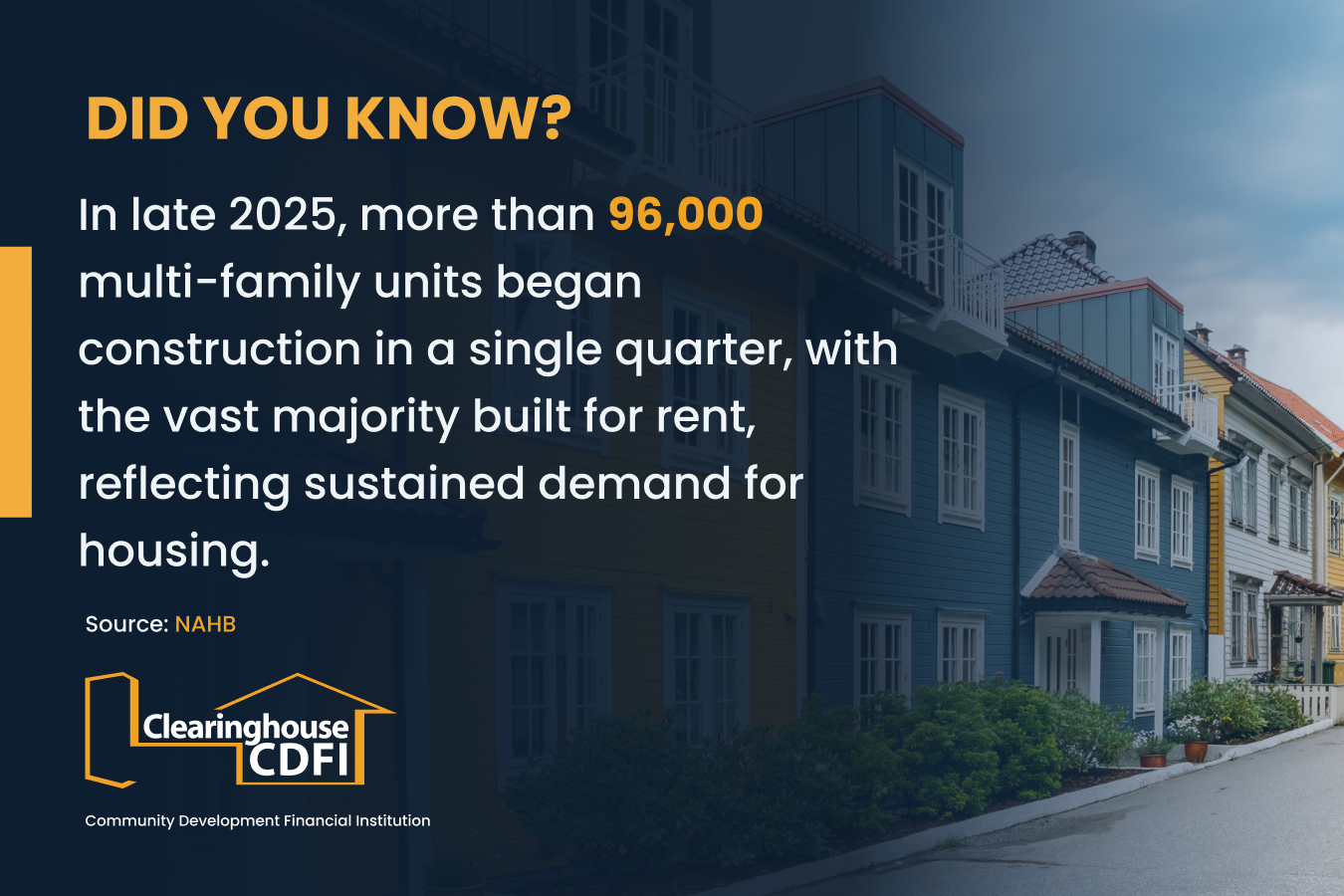
Rising multi-family development reinforces the need for financing aligned with long-term housing performance and occupancy.
When Multi-Family Projects May Fit a CDFI
Certain characteristics of a multi-family project can make CDFI financing particularly relevant. While every transaction is evaluated individually, three situations commonly indicate that a project may benefit from this type of financing.
When the Focus Is Affordable Housing
CDFI financing can be a fit for multi-family developments that create or preserve housing for lower-income households. This may include projects that reserve a portion of their units for residents at defined income levels, as well as the acquisition and rehabilitation of existing affordable properties to preserve their long-term affordability.
These projects often involve affordability restrictions, public or private funding sources, and financing requirements that must work together over the life of the property. A CDFI can evaluate those elements as part of the overall transaction.
When the Capital Stack Is Layered
Multi-family projects may rely on several sources of capital rather than a single loan. A primary loan may be combined with subordinate financing, while grants or public subsidies can provide additional project funding. Tax credit equity may add another layer to the capital stack. Each source carries its own requirements and may enter the transaction at different times, making coordination among them an important part of the financing structure.
CDFIs can participate in these layered structures by providing financing that fills a specific need within the overall capital stack. For example, a CDFI loan may work alongside other financing sources to help meet the total capital needs of an eligible project. For multi-family affordable housing developments using Low-Income Housing Tax Credits, financing must also account for how tax credit equity and other funding sources enter the transaction.
When the Goal Is Community Revitalization
CDFIs are specifically focused on directing capital to communities and populations with limited access to traditional financing, which can make multi-family projects in these areas a natural fit for their financing.
The impact may also extend beyond housing. A development might include ground-floor space for a daycare, health clinic, or other community-serving use, or bring needed housing to a rural or Native community. In these cases, a CDFI can consider both the housing need and the role the development will play within the surrounding community.
What Shapes Multi-Family Loan Terms
Multi-family loan terms reflect market conditions as well as the specifics of the property and transaction. Occupancy and operating history help demonstrate how the property has performed, while cash flow shows its capacity to support repayment. Property value and the amount being borrowed help establish the lender’s exposure, and the project’s stage of development provides additional context for how the loan should be structured.
A stabilized property with consistent occupancy and a proven operating history gives a lender more information about its ability to support repayment. A property still in development or lease-up has less operating history to evaluate, so the lender may need to account for additional risk when structuring the loan.
The relationship between the community loan amount, property value, and available cash flow also affects how a lender structures financing. Lenders evaluate whether projected income can comfortably support debt payments and how much of the property’s value is being financed. For projects with multiple funding sources or affordability requirements, they may also consider the timing and conditions of those sources when determining the appropriate loan structure.
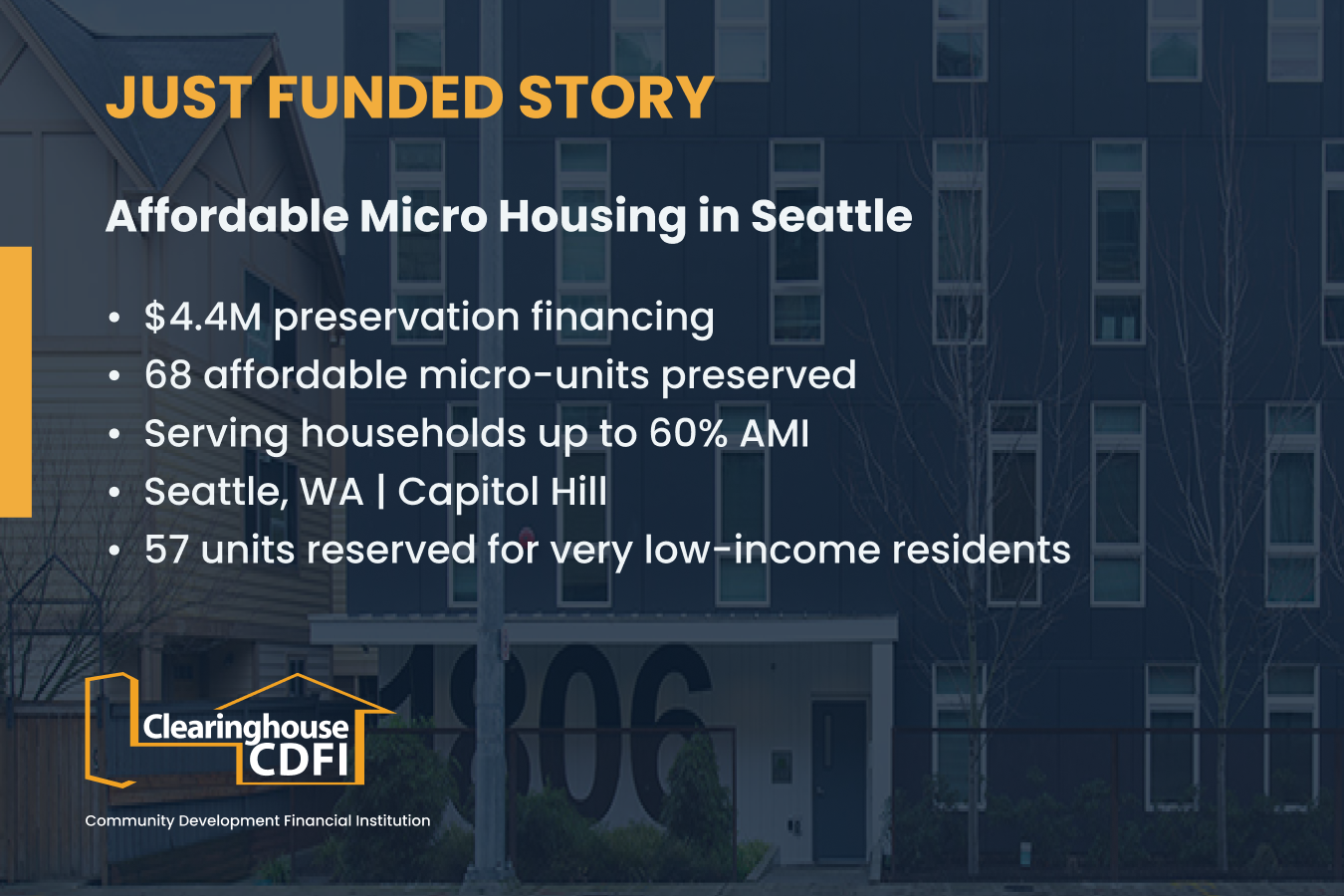
Financing that preserves long-term affordability while supporting a nonprofit-managed community with services and shared amenities for residents
Multi-Family Financing in Practice
The financing needs of a multi-family project depend on the property, its stage of development, and the sources of capital involved. For affordable housing in particular, financing may need to support acquisition or rehabilitation while working alongside existing debt or long-term affordability requirements.
One example is Preservation XV, a portfolio of 24 properties totaling 405 project-based Section 8 units near downtown Los Angeles. The project involved preserving existing affordable housing while completing rehabilitation and accessibility improvements across the properties.
Clearinghouse CDFI provided four loans totaling $44.85 million, including bridge financing to a HUD loan. The financing allowed work on the properties to move forward while the longer-term financing was completed, helping preserve the affordability of the units and finance needed improvements.
Examples like this illustrate how different sources of financing can serve distinct purposes within a multi-family transaction. Understanding what each source needs to accomplish, and when the capital is needed, can help borrowers determine the financing structure that best supports the project.
Contact Clearinghouse CDFI to discuss your project.Multi-Family Lending: FAQs
What is multi-family lending?
Multi-family lending is financing for residential properties with multiple units, such as apartment buildings or housing developments. These loans are typically secured by real estate and supported by rental income, with terms established through underwriting. The lender evaluates the property and the borrower, considers the project’s specific needs, and determines whether the transaction can support repayment.
How does multi-family financing work?
Multi-family financing is based on the property’s ability to generate rental income and support repayment. The lender reviews the asset, occupancy, borrower qualifications, and any funding layers needed to close the transaction.
What factors influence multi-family lending rates?
Multi-family lending rates can be influenced by market conditions as well as factors specific to the borrower, property, and transaction. Property value and loan amount affect how much of the property’s value is financed, while occupancy, operating history, and cash flow help a lender assess the property’s financial performance and capacity to support repayment. The project’s stage also matters: A property in pre-development presents different considerations from one that is further along or already stabilized. The lender evaluates these factors within the overall financing structure when determining appropriate rates and terms.
How is multi-family financing different from other real estate loans?
Multi-family financing is specifically structured around residential properties with multiple units and ongoing rental income. Because rental income typically supports repayment, lenders evaluate factors such as occupancy, operating performance, expenses, and cash flow when underwriting the property.
When might a multi-family project fit CDFI financing?
A multi-family project may fit CDFI financing when it has a sustainable path to repayment and aligns with the lender’s financing criteria and community development focus. This can include affordable multi-family housing, mixed-use properties, preservation projects, or transactions with layered financing.
Borrowers are expected to demonstrate financial and operational readiness, along with the ability to support repayment.
Do CDFIs offer grants for multi-family projects?
Some CDFIs may offer grants, but Clearinghouse CDFI does not. Clearinghouse CDFI provides loan-based financing with terms and repayment requirements established through underwriting. Other funding sources, including grants or subsidies from third parties, may be part of a project’s broader capital stack.